
Terumah, the Mishkan, and What Truly Lies at the Center



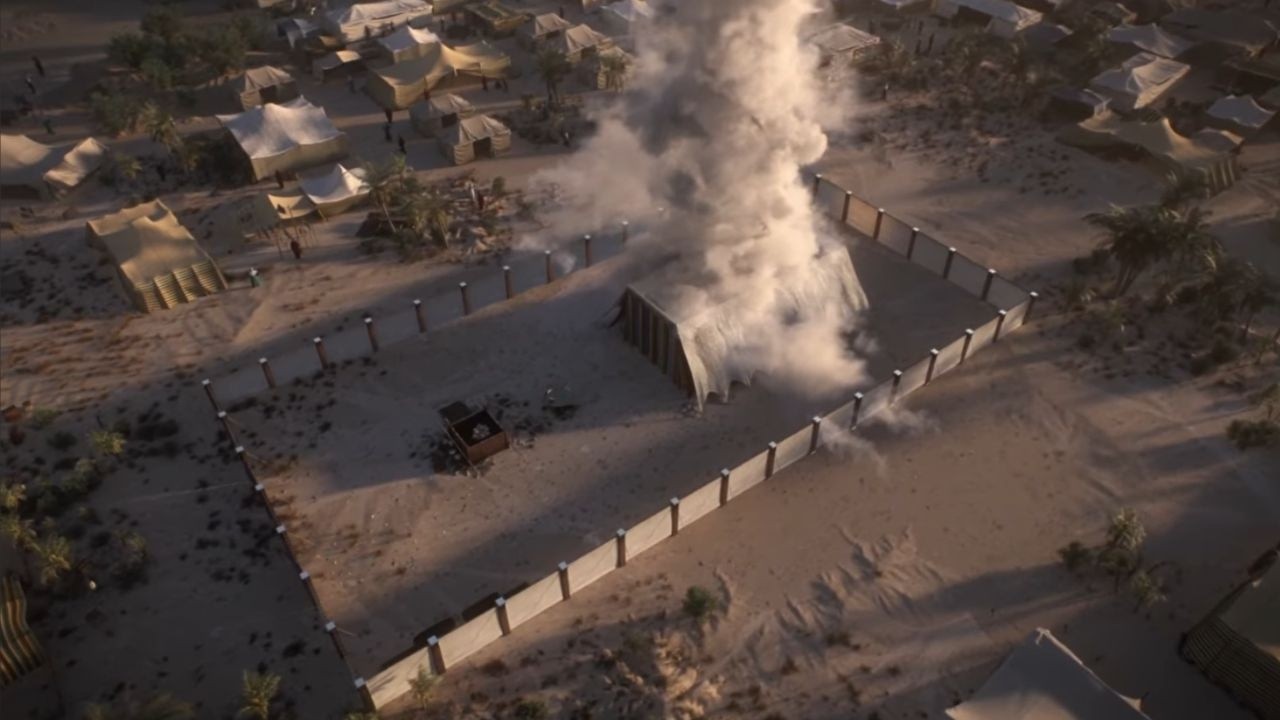
In this week’s Torah portion, Terumah, we begin learning about the Mishkan—the Tabernacle—the portable sanctuary that accompanied the Israelites through the wilderness.
The Torah lingers over its details: the acacia wood beams, the woven fabrics of blue and purple, the gold overlays, the silver sockets, the copper altar. It is a project of astonishing beauty and precision. Every material, every measurement, every vessel is directed toward one purpose: to create a space where the Divine presence could dwell among the people.
“Let them make Me a sanctuary,” God says, “and I will dwell among them.”
The Mishkan was not simply a building. It was a vision of how physical matter can be elevated for spiritual purpose. Wood, fabric, metal—objects of this world—transformed into conduits for holiness.
And yet, for many modern Jews, one element of the Mishkan raises difficult questions: the animal sacrifices.
How are we to understand them?
Sacrifices in Context
It is honest to admit that the idea of daily animal offerings feels foreign—perhaps even troubling—to contemporary sensibilities.
Maimonides, writing nearly a thousand years ago, addressed this directly. He explained that in the ancient world, animal sacrifice was the universal form of religious worship. Pagan cultures offered animals to multiple gods as the primary expression of devotion.
According to Maimonides, the Torah did not invent sacrifice—it redirected it. Rather than allowing Israel to be swept into surrounding pagan practices, the Torah created a highly regulated, centralized system with strict boundaries: one God, one location, detailed laws, moral limitations.
In this view, sacrifices were a historical accommodation, a way to guide a people emerging from idolatrous cultures toward ethical monotheism without demanding an abrupt civilizational leap.
Whether or not one fully adopts Maimonides’ explanation, one fact is undeniable: for the majority of Jewish history, there have been no animal sacrifices.
After the destruction of the Second Temple nearly 2,000 years ago, sacrifice ceased. Jewish life did not collapse. It transformed. Prayer replaced offerings. Study replaced ritual slaughter. Acts of lovingkindness became the primary service of the heart.
Roughly two-thirds of Jewish history has unfolded without sacrifices.
That matters.
What Happened Inside
There is another detail about the Mishkan—and later the Temple—that is often overlooked.
Animal offerings took place in the outer courtyard.
But inside the sanctuary—the Heichal—no animals were sacrificed.
There stood the golden menorah, lit daily with pure olive oil, radiating spiritual light.
The table of showbread, renewed each week, sustaining the priests.
And the incense altar, where fragrant plant-based spices rose heavenward.
And beyond that, in the Holy of Holies, stood the Ark of the Covenant—the resting place of the Tablets, with the vegan manna inside.
No animals were brought there.
If one were to look at the structure from above, a pattern emerges: the further inward one goes, the more refined the service becomes. The outer layer involves animal offerings. The inner chambers are sustained by light, bread, and incense—symbols of sustenance, illumination, and prayer.
In Jewish thought, the inner dimension is always the essential one.
The Mishkan itself seems to whisper that there is something deeper than sacrifice at the heart of Divine service.
The Direction of History
We pray daily for redemption, for a Third Temple, for a world restored to harmony and peace. What exactly that future will look like, we cannot know with certainty.
But it is difficult to imagine that in a messianic age characterized by global justice and compassion, humanity would return to daily animal slaughter as its primary expression of worship.
Many classical commentators suggested that the trajectory of Torah points toward refinement, toward a world with less violence and more awareness.
The prophet Isaiah envisions a time when “they shall not hurt nor destroy in all My holy mountain.” That image is not one of regression, but of moral evolution.
If Jewish history has already demonstrated that closeness to God does not depend on animal sacrifice, perhaps that itself is part of the unfolding story.
Elevating the Physical
The Mishkan teaches something timeless: holiness is not found by escaping the material world, but by elevating it.
Gold can become sacred. Fabric can become sacred. Bread can become sacred. Oil can become sacred.
The question is not what we possess—but how we use it.
Why do we have what we have?
What purpose does it serve?
Does it increase light in the world—or diminish it?
These questions apply to every aspect of life. They apply to our homes, our resources, our talents. And they apply, perhaps most powerfully, to our food.
Food is one of the most direct ways we interact with creation. Through it, we can either perpetuate harm or cultivate compassion. We can normalize suffering—or reduce it.
In our time, when plant-based options are abundant and accessible, the possibility exists to nourish ourselves in ways that align more fully with Judaism’s deepest commitments to kindness, stewardship, and reverence for life.
In my work as a rabbi and educator with Jewish Vegan Life, I often encounter Jews wrestling sincerely with these questions. They are not seeking to reject tradition. They are seeking to understand how to live it more deeply—how to bring the values of the Torah into their kitchens and onto their plates.
That, too, is a kind of Mishkan.
Bringing the Divine Among Us
The Torah portion begins with a call for contributions—terumah—offerings from the heart. Each person was invited to give according to their ability, to help build a space where God’s presence could dwell.
The Mishkan was not constructed from miracles. It was constructed from human choices.
So too today.
If the goal of the Mishkan was to bring more godliness into the world, then every choice that increases compassion, reduces harm, and elevates the physical toward the spiritual continues that sacred work.
The sanctuary is no longer a structure in the desert. It is the life we build through our daily actions.
And perhaps the deepest question Terumah asks us is this:
What lies at the center of our own inner sanctuary?
If it is light, sustenance, and reverence for life, then we are already walking in the direction the Mishkan was meant to guide us.
May we learn to use what we have—every resource, every possession, every meal—to bring more holiness, more joy, and more compassion into the world.
That is a sanctuary worth building.