
After the Flood: Returning to the Vegan Vision of Creation


After experiencing the abundance of holidays and the strong spiritual focus of the month of Tishrei, we now enter into a very different kind of month in the Jewish calendar: the month of Cheshvan.
Without any holidays or festivals of its own, this month couldn’t be more different, as the video above summarizes.
On the surface it seems like a drab and very regular month, with no highlights and nothing to specifically look forward to (except for the weekly Shabbat of course!).
But, of course, in Judaism, nothing is drab or regular.
When we look beneath the surface of Cheshvan, we find meaningful ideas that could help us harness the spiritual experiences we had during Rosh Hashanah, Yom Kippur and Sukkot and apply their influence to our lives throughout the year.
Yes, there may not be any “special” days in this month. That explains why sometimes this month is called “Marcheshvan” since “Mar” means “bitter” in Hebrew. A lack of festivals and unique times could lead to a feeling of bitterness or sadness.
But it need not be that way.
In fact, the Hasidic tradition likes to call this month “Ramcheshvan” as “Ram” means “to elevate”, alluding to the unique opportunity we have this month to elevate the everyday and regular moments of our lives with spiritual meaning and attention. From this perspective, it seems that Cheshvan is the perfect follow-up to Tishrei since the main objective and goal of all of Judaism is to infuse our ordinary lives with spiritual focus; to use the mundane and everyday as vehicles for creating a life of purpose and meaning, healing and fixing. For us and the entire world.
This concept could, and should, be applied very strongly to our decisions around food. In our world of seemingly infinite food options we could choose what to eat purely based on our physical desires, placing taste over any other value. Or we can elevate our food choices and consider the impact of our food choices on our own health, on the welfare of animals and the environment when deciding what foods to purchase and consume. When we choose the latter, we are taking one of the most mundane and physical actions we engage in, the act of eating, and elevate it to the level of spiritual, conscious and even holy.
At Jewish Vegan Life, we see this month as an important opportunity to take the inspiration we felt during the previous month’s holidays to become better versions of ourselves and do more to help the world by eating a plant-based diet and aligning our food choices with foundational values of our tradition: compassion, justice, and responsibility. We provide a diverse set of recipes on our website here.
A little known fact about the month of Cheshvan is that it is the month that the biblical Flood began. It’s crucial to remember that the flood waters came in response to the moral and spiritual decline of humanity, as the Torah records: “the Earth was filled with lawlessness” (Genesis 6:11). Humans were created with a specific purpose and a path and when they deviated greatly from that path God wanted to start all over again with Noah and his family and, through him, give humanity another chance to fulfill their divine mission. This is a powerful teaching early on in the Torah about the consequences of our actions and how our actions have a significant impact, even on the entire world.
In our generation today, more than in any other previous generation, our food choices have global consequences and are capable of impacting humans, animals and ecosystems half way across the world in a way that was impossible less than a century ago. That’s why it’s more important than ever to strive to eat a plant-based diet which greatly reduces our destructive impact on the planet and all of the creatures that call it home.
This is in line with a powerful teaching from the oral Torah tradition that talks about how God, immediately after creating the world, said to the first humans: “Make sure you don’t destroy My world. If you do, there will be no one to come after you to fix it.” This is a stern warning to humanity that the abilities and capabilities that differentiate them from the rest of the animal world, if not used carefully and consciously, could cause great damage to the world.
We have seen this ancient warning come to fruition as we modern-day humans have wreaked unprecedented havoc on the environment through our modern-day lifestyle. But as Rebbe Nachman of Breslov taught, “If you believe you can destroy, believe you can fix.”
We have already broken so much, but it’s not too late to fix that brokenness. By changing our actions, we can change the future. Through thoughtful and compassionate choices, we can break the pattern of destruction that our modern lifestyle has brought to the world. And through choosing a plant-based diet, we can make sure that what we eat minimizes our negative impact on animals and all of Creation.
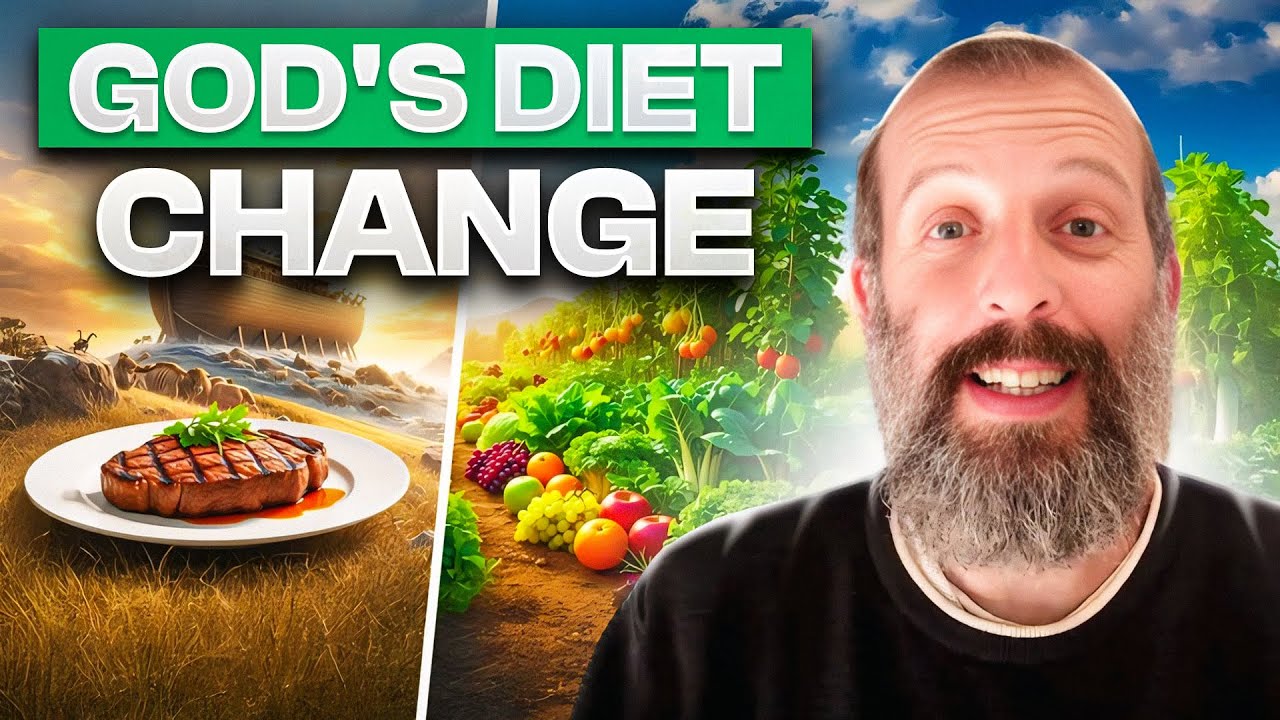
It’s interesting to note that the Flood also came to an end during the month of Cheshvan. And it was upon leaving the ark that God gave humanity, through Noah, the permission to eat animals for the first time. Some look at this as God saying this was the new ideal. But there are important Torah commentaries that strongly believe the opposite. Remember that the Flood came as a result of the moral and spiritual decline of humanity. God felt that they could no longer live on the level of the original ideal, but that doesn’t mean the ideal was meant to be forgotten.
Rabbi Avraham Isaac Kook (1865-1935) wrote in regards to this:
Is it possible to conceive that a highly valued moral virtue, which had already existed as a part of the human legacy, should be lost forever? It was already established…that the very same permission to eat meat, granted after the Flood, was not intended to be the actual practice for all time. For how is it possible for a lofty and enlightened moral condition, once instituted, to vanish (as though it had never been)?
Rabbi Moses Cassuto (1883-1951) writes in his commentary to the Torah:
Apparently the Torah was in principle opposed to the eating of meat. When Noah and his descendants were permitted to eat meat this was a concession conditional on the prohibition of the blood. This prohibition implied respect for the principle of life [“for the blood is in the life”] and an allusion to the fact that in reality all meat should have been prohibited. This partial prohibition was designed to call to mind the previously total one.
Lastly, Rabbi Eliezer Melamed, a prominent Orthodox rabbi in Israel today, writes in his widely read book of Jewish law “Peninei Halachah”:
Though the Torah permits to eat animals, there are certain mitzvot through which the Torah guides us to treat them with mercy and kindness and, as a result, focuses us to be aware of the moral problem with eating meat in order to prepare us for the future time in which we will cease to eat meat.
These are powerful words from leading Jewish leaders that together show us very clearly that the permission to eat meat after the Flood was not “a new ideal” but rather an unfortunate concession that stemmed from the decline of humanity. Judaism’s hope and vision is that we will return to our original moral and spiritual state and, with that, we will see the fulfillment of Rav Kook’s vision, as he writes:
When humanity arrives at its goal…then human beings will recognize their relationship with all the animals, who are their companions in creation…then humanity will no longer be able to in any way brandish its sword over animal life, but they will dwell in safety together, and savor the splendor of life.